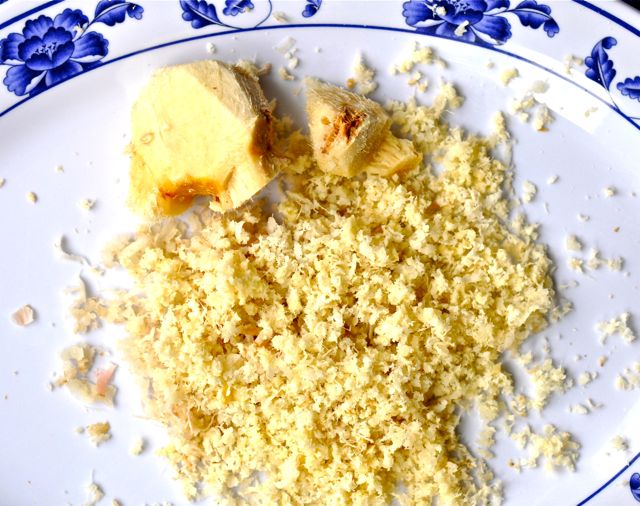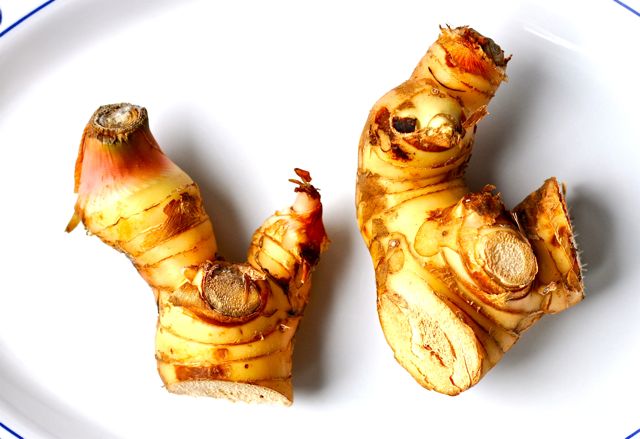
Unlike regular ginger, galangal (also known as Kha or Thai ginger) has a light, floral aroma and taste. It is essential in making Thai soups and salads. Regular ginger is not a substitute for galangal. You can find galangal in oriental markets and most large grocery stores. Frozen galangal may be used for flavoring soups but avoid using for salads.
For Soup
Galangal root is used to flavor Thai soups such as chicken coconut (tom kha) and tom yum soups. Old and woody roots with more pronounced aromas are used in flavoring soup broths. This galangal is not meant to be eaten and should be removed prior to serving the soup.
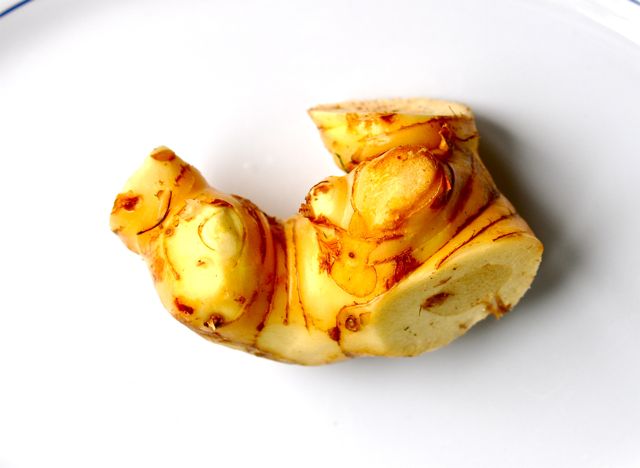
Select large, firm roots, light in color and free from blemishes. Cut and peel away any bruising and brown spots. You do not need to entirely peel the root for flavoring soups. The cleaned root should look like this:
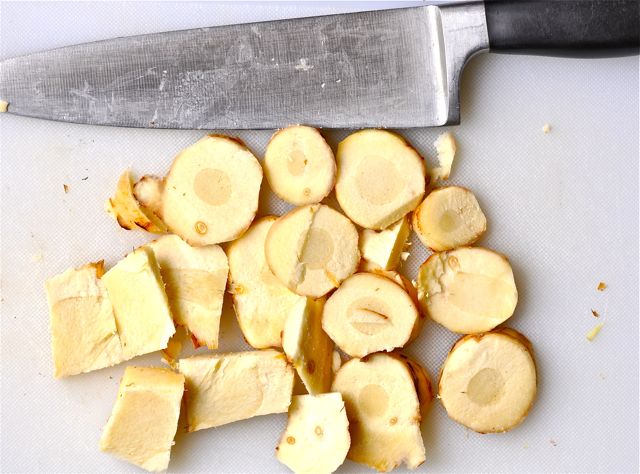
Lay the trimmed galangal root flat on a sturdy cutting board and with a large heavy-duty knife or cleaver slice into quarter-inch rings. Be careful: galangal roots sold in the US are typically tough, woody and difficult to safely cut. For especially woody roots, I like to firmly push the knife about an eighth of an inch into the root until it attaches to the root, lift the knife and root slightly off the cutting board, then with my free hand on top the knife whack the root down on the cutting board. Using both hands on the knife to cut ensures that I don’t accidentally cut my fingers.
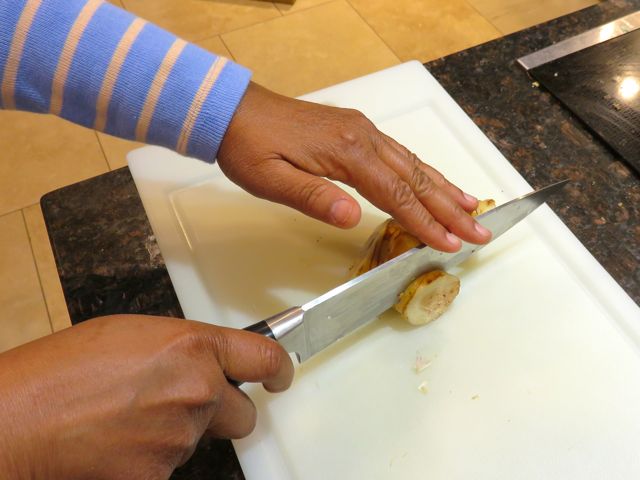
Cut all the root into coins. The galangal is now ready for use in soups.
For salad
Galangal is used in Northern Thai salads such as larb and nam tok. It is finely shredded and consumed along with the other salad ingredients. Select small young roots for salads. The roots should be light in color with minimal blemishes. If young galangal is hard to find, buy the older roots and use only the younger side shoots. You can freeze the woodier center for later use in soups.
Peel the entire galangal root with a small paring knife or sharp peeler.
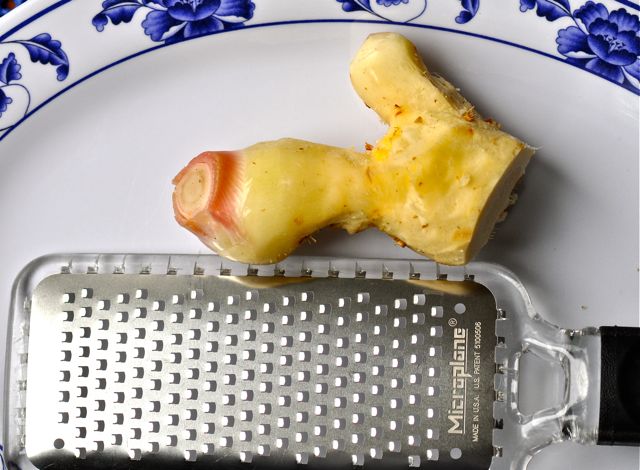
Using a small microplane shredder or sharp box shredder on fine setting, shred the entire root. It is easier to shred the root across the grain. If the root is on the older side, shred the more tender outer layer lengthwise along the grain and save the woody center for other uses. Frozen galangal will turn brown in color but can still be used later to flavor soups.
The shredded root is now ready to be incorporated into the salad. Use right away. Do not grate the root ahead of time. It will discolor and turn brown within an hour. Once mixed into the salad, the acid in the salad dressing – typically lime juice – will keep the grated root from turning brown.